
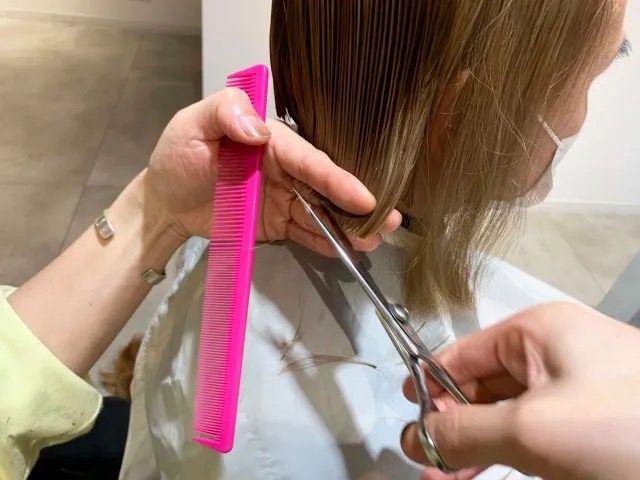
Salons are dying in more ways than one.
One of the great things about gradually losing my hair is that I don’t have to worry about getting it cut in any significant way. I can get the job done myself with some electric clippers these days, which is good, because the place where I used to get it cut hiked prices 60 percent in the past year.
It’s pretty dire straits for a lot of businesses these days, but hair salons in Japan seem to be especially feeling the heat. Last year saw the highest-ever number of salons filing for bankruptcy at 235, breaking the record set in 2024 with 215 bankrupt hair stylists.
▼ Don’t blame us. Our writers have single-handedly done more than enough to support hair salons over the years.
This also had an effect on the average lifespan of salons, which could expect to survive for 13 years in 2025, down from 14.1 years in 2024. Also, of the currently active salons, 49 percent are less than 10 years old.
This is all worse than even during the COVID pandemic, partially because such businesses were supported through that period by various subsidies and zero-interest loans. Then, annual bankruptcies actually hit a record low in 2021, with only 68. The current situation more closely resembles what took place during the 2008 global financial crisis, except that the reasons behind it are different.
Prior to 2008, hair salons were considered rather stable businesses, since most people always need haircuts. However, during the crisis, people began searching for ways to cut costs as much as possible. Around the same time, discount hair cutters like QB House hit the scene, causing widespread disruption to the market, and making it hard for established salons to maintain with their relatively high prices. As a result, bankruptcies climbed above 100.
Now, with inflation and a looming oil crisis, people are once again seeking out cheaper ways to live their daily lives, mimicking what happened in 2008. However, this time the price squeeze is exacerbated by just about everything rising in cost, from electricity to hair products, making it virtually impossible to lower prices to meet customer needs.
▼ And customer needs in Japan aren’t even nearly what they used to be.

To make matters much worse, many salons can’t even find enough staff to operate. Stylists are often drawn to the wages and security of large chains and salons with strong reputations, leaving small to mid-sized ones little to work with. These smaller businesses tend to recruit straight out of beauty school, but many of those new grads have dreams of opening their own salons and end up leaving shortly after being hired.
Readers of the news all seem to agree that the real driving force behind the bankruptcies is an oversaturation of the market.
“There are too many salons.”
“I see so many incompetent hairdressers at salons these days.”
“I haven’t gone as often after shaving my head, but I go once a year to change the color.”
“Even the cheapest places cost over 1,300 yen (US$8.30) now.”
“Hair salons, dentists, and restaurants. There are too many of all of them.”
“The old one in my neighborhood is still going. It must have loyal customers.”
“The population is decreasing, so of course demand is decreasing too.”
“I think the 1,000-yen discount places have better hairdressers. They have to handle so many customers, they must be highly experienced.”
“There are more salons in Japan than traffic lights.”
“There are about four to five times as many salons as there are convenience stores.”
Those last two comments might be hard to believe, and as a driver in Japan, I can attest that there is an absurd number of traffic lights here. However, it is true. Despite the record bankruptcies, it still doesn’t put a dent in the roughly 250,000 salons operating nationwide. As for traffic lights, Japan still has a lot, but they fall short of hair salons, with only 210,000 installed. And although convenience stores may seem to be everywhere, that’s more to do with strategic locations because Japan only has about 55,000 of those.
This would suggest that the rapid increase in bankruptcies isn’t just a sign of the current economic hardships, but also early cracks in an industry that’s been stretching itself too thin for a long time now, much like my own follicle count.
Source: TDB Business View, IT Media, Golden Times, Japan Up!, Japan Today
Photos ©SoraNews24
● Want to hear about SoraNews24’s latest articles as soon as they’re published? Follow us on Facebook and Twitter!


