
Amutable has opened signups for design partners to test an immutable, image-based system that ships every change as a signed update. Built by the engineers behind systemd, it uses hardware attestations to verify each machine’s state before allowing deployments.
Gregory Kurtzer’s Ginux is a brand-new Rust kernel that runs Linux binaries unchanged despite not being Linux underneath. An AI agent generated 139,000 lines across 11 days, proving a Linux-compatible kernel can emerge from scratch without needing to fork the original.
BeamFS landed on the kernel mailing list this week as an RFC with warnings about existing data loss bugs. Still untested in real radiation environments, it prioritizes detecting corruption over silently serving bad data.
FreeBSD founder Jordan Hubbard built Daemonarchy in under two hours using GPT Astra 6 as an answer to the many requests he received that said FreeBSD deserved an installer as slick as Omarchy.
Tesco is ditching VMware for Proxmox in its stores after Broadcom stopped supporting perpetual licenses and demanded 175% higher prices. A newly posted job suggests a gradual migration off VMware by the end of 2027.
This edition of FOSS Weekly is supported by Surfshark, a privacy company based in the Netherlands.
Is your browsing really your business?
At airport and enjoying public Wi-Fi? Strangers on the same network can snoop on what you do online. At home, your ISP can see every site you visit.
In the US, your own internet provider can legally package your browsing habits, from that midnight health anxiety to your surprise anniversary plans, and sell them to the highest bidder.
Surfshark One protects your online activities.
Its VPN encrypts your traffic and hides your IP. Your data is no more a revenue share for your internet provider. Alternative ID gives you a masked email address, so you can sign up for things without handing out your real one. Antivirus protects your Android and Windows devices (helpful for older people who are not tech savvy). A single plan covers numerous devices.
Get Surfshark One for $2.49/month + 3 extra months. That’s just $67.23 for 27 months. Grab the deal before it ends.
🧠 What We’re Thinking About
Mirko Brombin from Bottles says he is pushing Microsoft Office onto Linux because real-world Linux users often need it, regardless of LibreOffice’s merits.
🎃 Tales From the Linux Crypt
Halloween is here. While I will revisit Agatha Christie’s Hallowe’en Party, I will share some morbid, scary but fun articles for you to read 👻
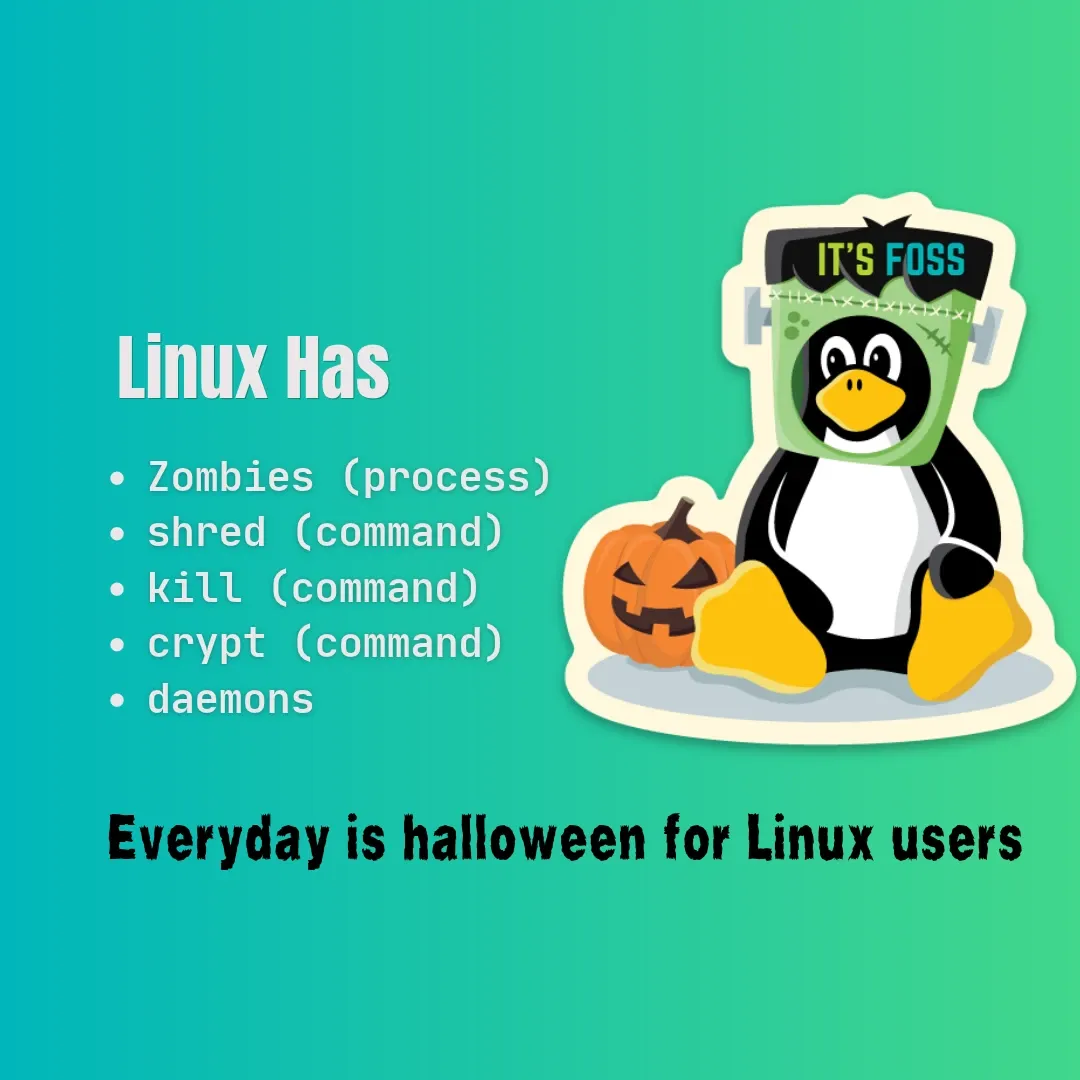
Linux is scary place, isn’t it? There are zombie (processes), kill (command) and daemons.
Jokes apart, there are several dangerous Linux commands like rm -rf / or the fork bomb that you should never run on your system.
Since Halloween is the festival of remembering the dead, let’s take a look back at some of the loved Linux distros of the past that no longer exist.
Since I started my Linux journey with Ubuntu 17 years ago, I have seen several ambitious projects killed by Ubuntu. Can’t really blame them, but I would have loved to see the convergence dream being a success.
Although the discontinuation of scp command is greatly exaggerated, there are quite a few Linux commands that have been deprecated over time.
Resurrecting the dead is sort of a tradition in open-source world. Linux world is moving towards Wayland and so there are a few projects that are working to keep Xorg alive. And then here are some tools that got new life in the form of “new generation” version. If they were resurrected today, perhaps that can be renamed to “gen z” versions 😉
Those are not the only ones, there were several prominent projects that changed their license, and hence a new open source project rose to take their place. Open source software never really dies.
Halloween Makeover
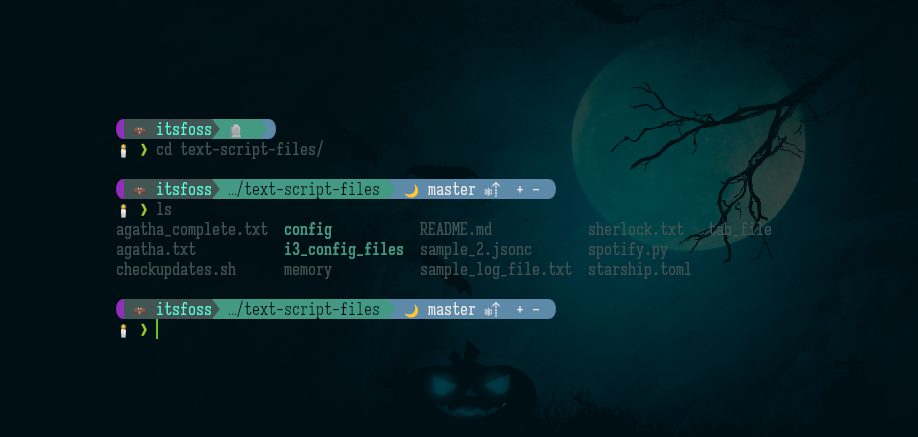
Above is the Kitty terminal with a special Halloween makeover. You can get the config file here.
If you would like to give your Linux system a little bit of Halloween touch, we have a few references for you. For Hyprland users, there are a few dot files here.
And a demo video showing how GNOME desktop can be customized with a “scary look”.
👷 Homelab and Hardware Corner
I tested a tiny, inkless, portable printer on Ubuntu 26.04. Interesting concept for a printer.
In other news, ArmSoM’s Sige7s squeezes the RK3588S chip into a Pi-sized board with a 6 TOPS NPU, Wi-Fi 6, HDMI 2.1, and up to 32GB RAM.
A modular USB-C hub combining Framework-compatible Expansion Cards with tools for measuring, powering and prototyping electronics is being crowdfunded.
✨ Apps and Projects Highlights
massCode is an open source note-taking app but specifically programmers for saving code snippets. The app has revamped recently with new features, including the MCP option.
📽️ Videos for You
I installed the openKylin distro from China and tested its “air gesture” and integrated AI agent features. You can watch it in action in this video.
💡 Quick Handy Tip
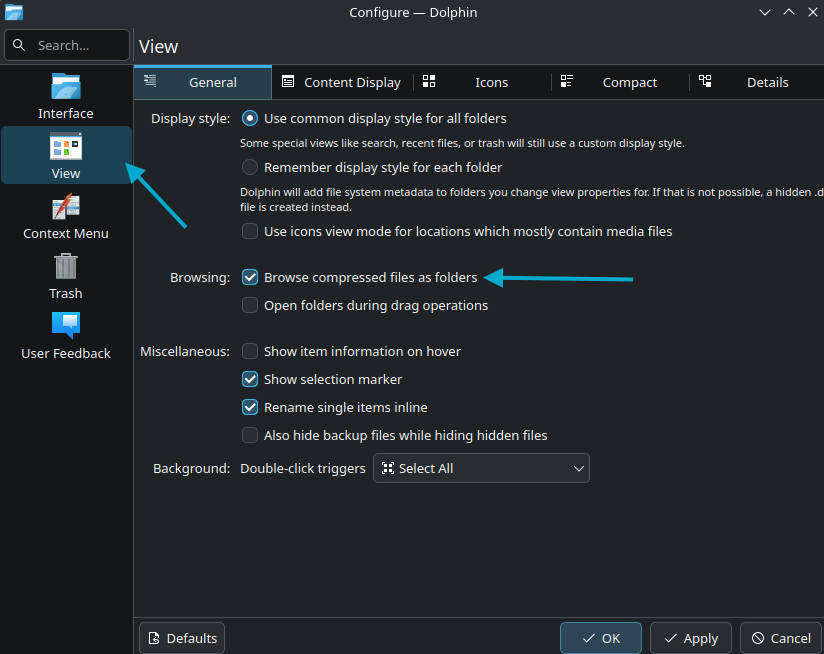
You can explore the contents of compressed archives (like ZIP, TAR, or GZ) directly in Dolphin as if they were regular folders:
- Click the three horizontal lines button, go to Configure, and select “Configure Dolphin…“
- In the left sidebar, click “View” and stay in the “General” tab.
- Here, check the box for “Browse compressed files as folders“, then click “Apply” and “OK.”
0:00
🎋 Fun in the FOSSverse
Okay, just a couple more Halloween stuff, I promise 😄 Here’s some fun Halloween-themed Linux puzzles and riddles for you to enjoy.
📆 Ubuntu 6.06 was the only release that got delayed and was not released in April (XX.04) or October (XX.10). Otherwise, Ubuntu always follows strict deadlines.
🧑🤝🧑 From the Community: The recent PHP vulnerability scare affecting programs globally has got our resident FOSSers talking.